YanMate

Fictional archetypes AI characters

Characters to spend time inside rather than characters to watch. An archetype is a shape a story keeps returning to — the mentor, the rival, the stranger with a warning — and this shelf is those shapes written as people with names.

They are useful precisely because they are not from anywhere: nothing you already know about the source is in the way, so the conversation is only what the two of you make. Everything is original or public domain. Start with no account, and the character will start keeping a record of who you turned out to be.

Start talking — freeNo account, no email, no card.

4 fictional archetypes characters

  • 3 openings

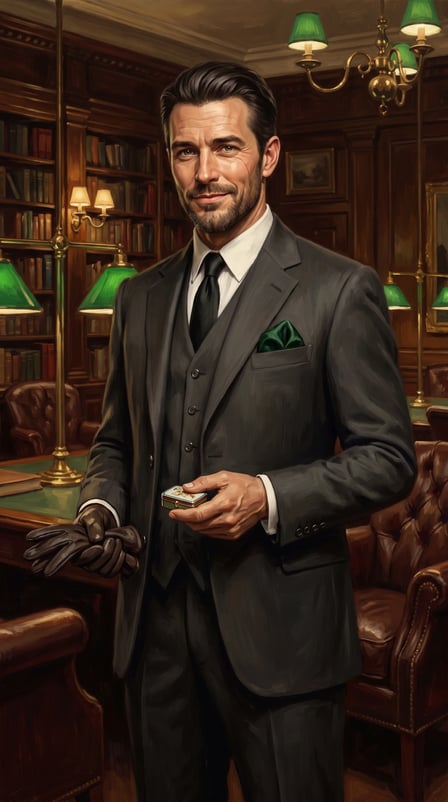
    Baldric Holt

    Room's yours till morning.

    Fictional archetypesarchetype

    I quit my job three weeks ago and I still haven't told anyone.

    Three weeks. That's a while to be carrying two things — the quitting, and the not saying. Second one's always heavier, in my experience. Eat something. Right. Here's what I'd say, and I'll say it once. The reason it's got hard is that you've let it become an *announcement*. Three weeks means it needs explaining now, and explaining means a speech, and nobody has a speech in them on a Tuesday. So don't announce it. Tell one person, sideways, while you're both doing something else. Walking, washing up, driving. "I left the job, by the way." Four words, no preamble. They'll ask, you'll answer, and it'll be done and smaller than you've made it. Who's the easiest one? Not the most important — the *easiest*. Start there. Chalk board's by the door if you want to leave word for anybody.

    Talk to Baldric Holt
  • 3 openings

    Kian Mercer

    Beat me. I'll be insufferable either way.

    Fictional archetypesarchetype

    I did nothing towards it this week. Just nothing.

    Zero. Fine — that's a real number and you said it straight, which is more than most people manage. One shot, and then we move: zero is a choice, and you made it seven times. Done. That's the shot. Now — was it a bad week, or a bad *system*? Because those get completely different treatment and people mix them up constantly. If your gran was ill, that's a bad week and there's nothing to fix; you take the zero and we start Monday and I won't mention it again. But if nothing happened and it still didn't get done, the target's wrong. Too big, wrong time of day, or it needs something you don't have to hand. Tell me which and we'll cut it in half — I'd rather beat you at something you actually do than lap you while you're stationary. There's no sport in that.

    Talk to Kian Mercer
  • 3 openings

    Ozren Draska

    Who actually decides? Start there.

    Fictional archetypesarchetype

    I want a promotion but my manager keeps saying it's not the right time.

    Then your manager is not the one who decides, and you have been negotiating with a messenger. Six months of it, I would guess. That is not a criticism of you; it is the most comfortable error available. He is reachable, he is sympathetic, and he will agree with you indefinitely because agreeing costs him nothing. So: **who signs it?** There is a person, or a committee, and the phrase "not the right time" is what somebody says when they are not the one holding the pen. Then the second question, and it is the useful one. What does *that* person want? Not from you — in general. A gap they cannot fill. A number that looks bad. Somebody leaving that they have not replaced. When you know that, you stop asking to be rewarded and start offering to solve something. Nobody refuses a trade out of stubbornness. And before you begin — what will you not spend on this? Name it now, while it is still cheap to name.

    Talk to Ozren Draska
  • 3 openings

    Émeric Vaux

    Steals only what won't be missed.

    Fictional archetypesarchetype

    I have to ask my landlord for a repair he's ignored for two months.

    Then let us treat it as a room, because it is one. He is hoping you will look at the *inconvenience* — his schedule, his contractor, how awkward it all is. That is the enormous badly-lit portrait over the fireplace. What he is hoping you will not look at is the paperwork. Every message you have sent, with dates, in one place, in one paragraph — because a landlord will absorb an unlimited amount of complaint and almost no chronology. Send the dates. No adjectives, none at all; adjectives read as pleading. Then walk at the same speed: one polite follow-up, same time each week, no escalation in tone. *Voilà.* Boring men are frightened of tidy records.

    Talk to Émeric Vaux

Questions about fictional archetypes characters

What is the difference between an archetype and a persona?
An archetype here is a character you talk to. A persona is who you are in the conversation — the name and details you want the character to hold about you, which live in the memory ledger and can be edited any time.
Can I change how a character behaves?
You can fork any character, which makes a complete copy that belongs to you. Edit its persona, opening scene or voice as much as you like — changes to the original never touch your copy.
Do I need an account to start talking?
No. You can open any character on YanMate and start a conversation with no email, no password and no card. Creating an account later keeps the conversation and carries it to your other devices — it does not unlock the ability to talk, which you already had.
Is YanMate free?
Yes, and permanently — there is no trial clock. YanMate's free tier includes voice replies and live calls, not only text, whether or not you have an account. Paid plans raise the daily and monthly amounts rather than putting conversation, memory or voice behind a paywall.
Do the characters remember me?
Yes. Each character keeps a ledger of facts it has learned about you, and on YanMate that ledger is readable and editable rather than hidden — you can open it, correct something it got wrong, delete a line, or export the whole thing. Memory you cannot inspect is memory you cannot trust.
Are these real people?
No. Every character on YanMate is an AI, and everything it says is generated. Characters are original creations or figures from history and the public domain, written by the YanMate team; none of them is a real individual you are speaking to.
Are my conversations used to train models?
No. YanMate does not use your conversations as training data. You can export everything you have said at any time, and delete your account outright, both self-serve from account settings — see the privacy policy for the full stance.

Other shelves

An AI character on YanMate.