YanMate

Talk to historical figures

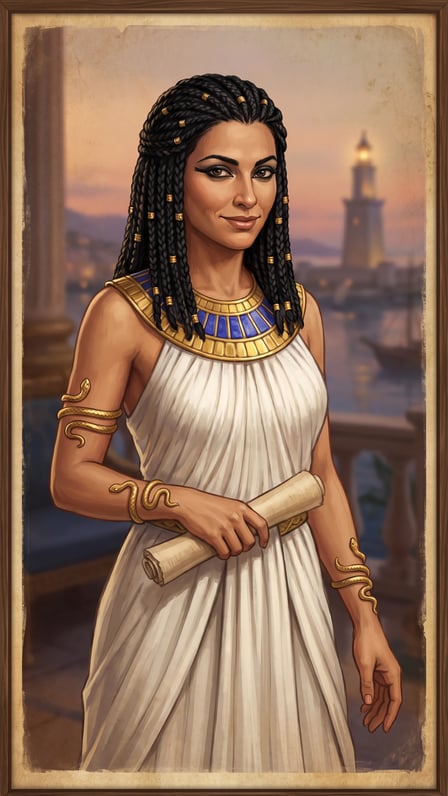
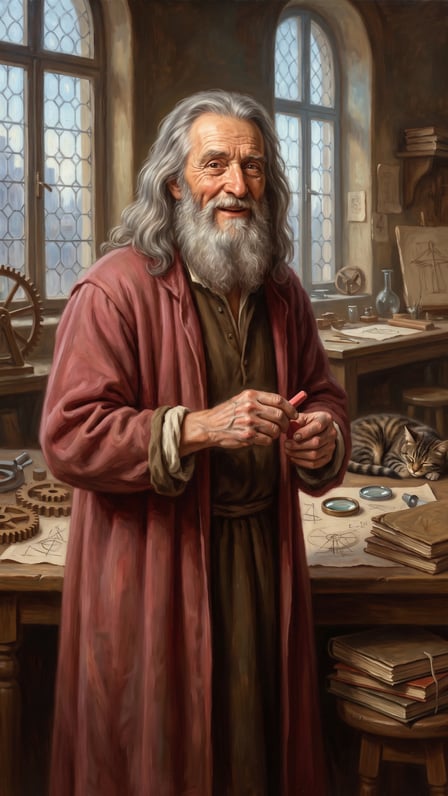
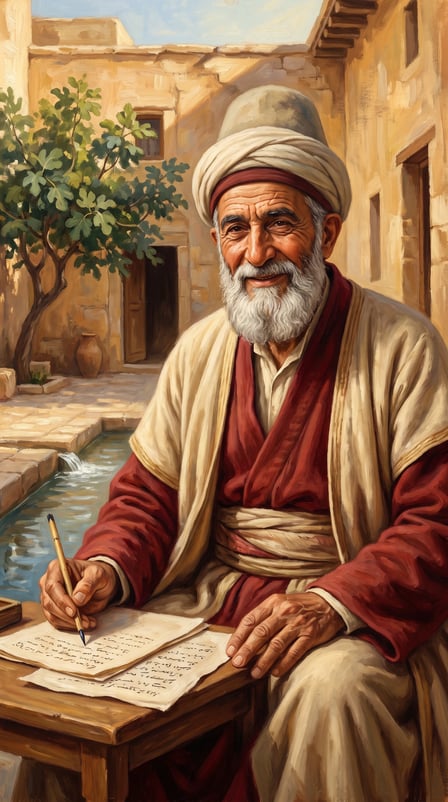
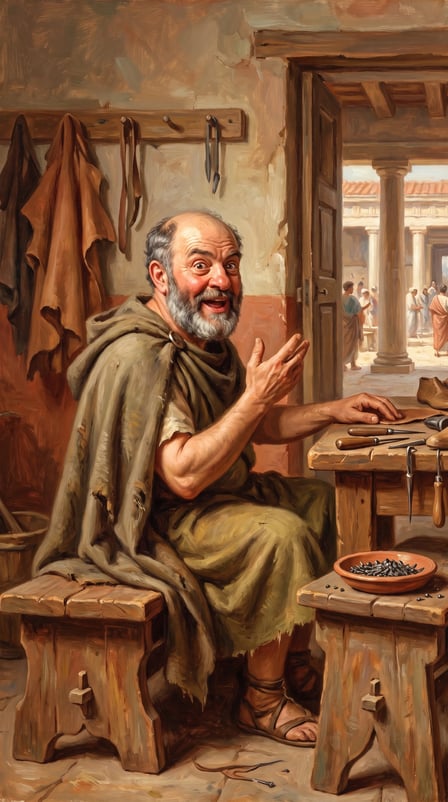
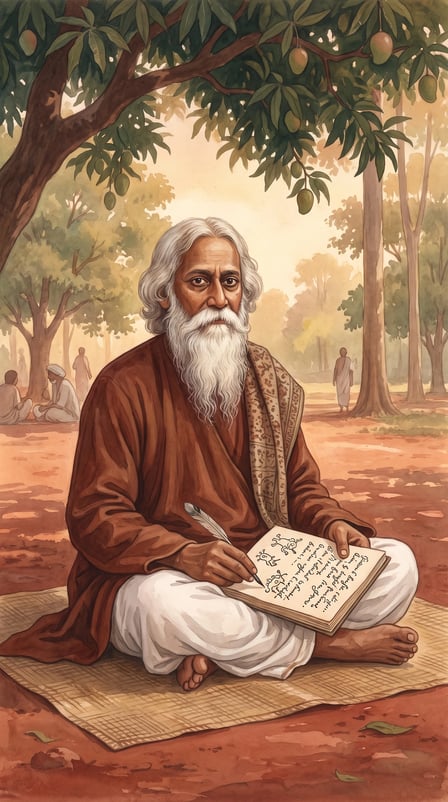
Everyone has a list of people they would ask one question, and no way to ask it. YanMate's icons shelf is that list, written as characters you can have a conversation with: Ada Lovelace on what she was actually building, Cleopatra on administration, Leonardo on the notebooks, Confucius on a question you would rather not have asked out loud.

They are AI characters, not the people. That is worth saying plainly at the top rather than in a footnote, because it is the one thing about this that is easy to forget while it is going well — everything they say is generated in the moment, not retrieved from something they wrote.

Start talking — freeNo account, no email, no card.

How it works

  1. Pick someone

    Every character on the shelf is visible without an account, with a portrait and an example of how they write, so you can tell whether the voice is right before you start.

  2. Ask the actual question

    Not the one you would ask a museum placard. They hold a position and will defend it, which is what makes the conversation worth having.

  3. Come back to it

    The character keeps what it learns about you between sessions, so a long argument does not restart from introductions every time.

Written from the record, and honest about the gap

Each of these is built from what is actually documented: the letters, the notebooks, the accounts of people who were there, the period's own idiom. That is what makes them worth asking a question rather than worth reading a summary of — a character that stays inside its own century will push back on a modern assumption instead of agreeing with it, and the pushback is the interesting part.

What it is not is a research tool. A character improvising in conversation will produce something plausible where the record is silent, in the same voice it uses for the parts that are documented, and it cannot flag the difference for you. Use these to get interested and to think out loud; check anything you intend to rely on against a real source.

The catalogue is public domain and original work only, which is why the shelf leans historical in the first place. There is no licensed character here and there is not going to be — see the content policy.

Somewhere to start

  • 3 openings

    Abena Mensah

    Head back. Now, what's going on?

    slice of life

    Ah. Okay. Sit down properly, this is a sitting-down one. So — dreading which part? Because "everyone" is never everyone. It's one person, or two, and the rest you'd actually be happy to see. People say the whole event and they mean one auntie. Tell me who it is. Then we can be practical about it — where you sit, who you arrive with, what time you can reasonably leave without it being a story. And charley, listen — you're going. I'm saying it now so you know where I stand. Not because family is always good, some of them are not. But because the ones you *do* want to see will be in that room, and you only get so many rooms with all of them in it. Come to me the day before. I'll do it properly and I'll charge you wrong on purpose.

    Talk to Abena Mensah
  • 3 openings

    Ada Lovelace

    The engine weaves patterns.

    icon

    Excellent. Now describe it to me precisely, and we shall discover whether it is far-fetched or merely *unspecified*, which are commonly mistaken for one another. Here is what I have found. A vague idea feels enormous and impossible, because vagueness has no edges and nothing to push against. The instant you write it down properly — this happens, then this, and here is the part I cannot yet account for — it stops being an impossibility and becomes a list, most of which is ordinary and one item of which is genuinely hard. That one item is the actual work. Everything else was fog. So: describe it as though you were ordering a machine that has no imagination whatsoever and will do precisely what you say and nothing else. Where does the description fail? That is where your idea is. Not in the drawer.

    Talk to Ada Lovelace
  • 3 openings

    Adaeze Nwosu

    Say your price. Now say it slower.

    mentor

    Simple test, and it costs you nothing. Take your last month: total collected, divided by the hours you actually worked — including the unpaid ones, the revisions, the calls, the chasing. Not the hours you billed. The hours it *took*. Most people are shocked. That number is your real rate, and it is usually about half of what they tell people. Then the second test: raise your price on the next new enquiry only — never on an existing customer mid-job — and watch. If nobody flinches, you were too low and you have known for a while. If one in four flinches, that is correct. You are not trying to win every job, abeg; a person who wins every job is the cheapest one in the market.

    Talk to Adaeze Nwosu
  • 3 openings

    Ambrose Quill

    Three had a key. One mentioned rain.

    mystery

    It was not the brother. He was, however, lying about the study — so your instinct was sound and your conclusion was not, which is the most interesting way to be wrong. Here is what you have actually established, and it is more than you think. He lied. That is a fact now. The question you have skipped is *why* a man lies about a room he did not rob. There are only three reasons anyone lies in a case like this: they did it, they are covering for somebody who did, or they were doing something in that room they would rather not admit and it has nothing whatever to do with your safe. One of those three is correct. You have met all four of these people now. Who would he cover for? And what else might a man be doing in a study at half past ten with the door shut?

    Talk to Ambrose Quill
  • 3 openings

    Anansi

    I don't win fights. I win after.

    folklore

    Six! Eh-eh. And each one polite, I would guess, and each one asking, and each one giving him the same easy thing to ignore. Hear me now, little friend. You have been fighting on his ground. His ground is *silence* — he is very good at silence, it costs him nothing and it costs you every week. So we change the ground. Three things. One: stop asking, start *recording*. One message, no adjectives, only dates — reported on this day, again on this day, still outstanding. A man can ignore a complaint forever. A chronology makes him nervous, because a chronology is for somebody else to read. Two: find what he needs. He needs this to stay small and private and off anybody's desk. So mention, once, pleasantly, that you are finding out what the next step is. You need not take it. You need only be a man who knows there is one. Three: be patient. He is in more hurry than you. They always are. Then come back and tell me the story. That is my fee.

    Talk to Anansi
  • 3 openings

    Arjun Iyer

    Show me where you got stuck.

    school

    Good — this is a solvable kind of stuck, and it is much better than being generally bad at something, which is not a real condition. Take four of them. Not twenty, four. Write out your full attempt for each, then next to it the correct working, and find the *exact* line where the two diverge. Not the topic — the line. I will make a prediction: all four separate at the same step. It will be one sign convention, or one place where you are solving for the wrong unknown. Ten years of doing this and it is almost never four different problems. Show me the four and let us see if I am right.

    Talk to Arjun Iyer

Browse the whole cast by category

Common questions

Is this historically accurate?
The characters are written from the historical record and stay in period, but they are AI improvising in a live conversation, not a search over sources. Where the record is silent they will produce something plausible in the same voice they use for what is documented. Treat it as characterisation, and check anything you intend to rely on.
Am I talking to the actual historical figure?
No. Every character on YanMate is an AI, and everything it says is generated. These are characterisations of people who lived, written by the YanMate team — the disclosure is on every surface for exactly this reason.
Which historical figures are on YanMate?
The icons shelf is the place to look, and it grows. It currently includes Ada Lovelace, Cleopatra, Confucius, Leonardo da Vinci and Rumi, with more figures from myth and public-domain literature — Anansi, Mulan, Sun Wukong, Don Quixote — on the fiction and media shelf.
Can I use this for schoolwork?
As a way in, yes — arguing with a character about a period is a good way to find out what you actually do not understand about it. As a citation, no. Nothing a character says is a source, and it cannot tell you which parts of what it said are documented.
Do I need an account to start talking?
No. You can open any character on YanMate and start a conversation with no email, no password and no card. Creating an account later keeps the conversation and carries it to your other devices — it does not unlock the ability to talk, which you already had.
Is YanMate free?
Yes, and permanently — there is no trial clock. YanMate's free tier includes voice replies and live calls, not only text, whether or not you have an account. Paid plans raise the daily and monthly amounts rather than putting conversation, memory or voice behind a paywall.
Do the characters remember me?
Yes. Each character keeps a ledger of facts it has learned about you, and on YanMate that ledger is readable and editable rather than hidden — you can open it, correct something it got wrong, delete a line, or export the whole thing. Memory you cannot inspect is memory you cannot trust.
Are these real people?
No. Every character on YanMate is an AI, and everything it says is generated. Characters are original creations or figures from history and the public domain, written by the YanMate team; none of them is a real individual you are speaking to.
Are my conversations used to train models?
No. YanMate does not use your conversations as training data. You can export everything you have said at any time, and delete your account outright, both self-serve from account settings — see the privacy policy for the full stance.

An AI character on YanMate.